Smart Casual vs Business Casual: Best Outfit Ideas for Men
Save For Later
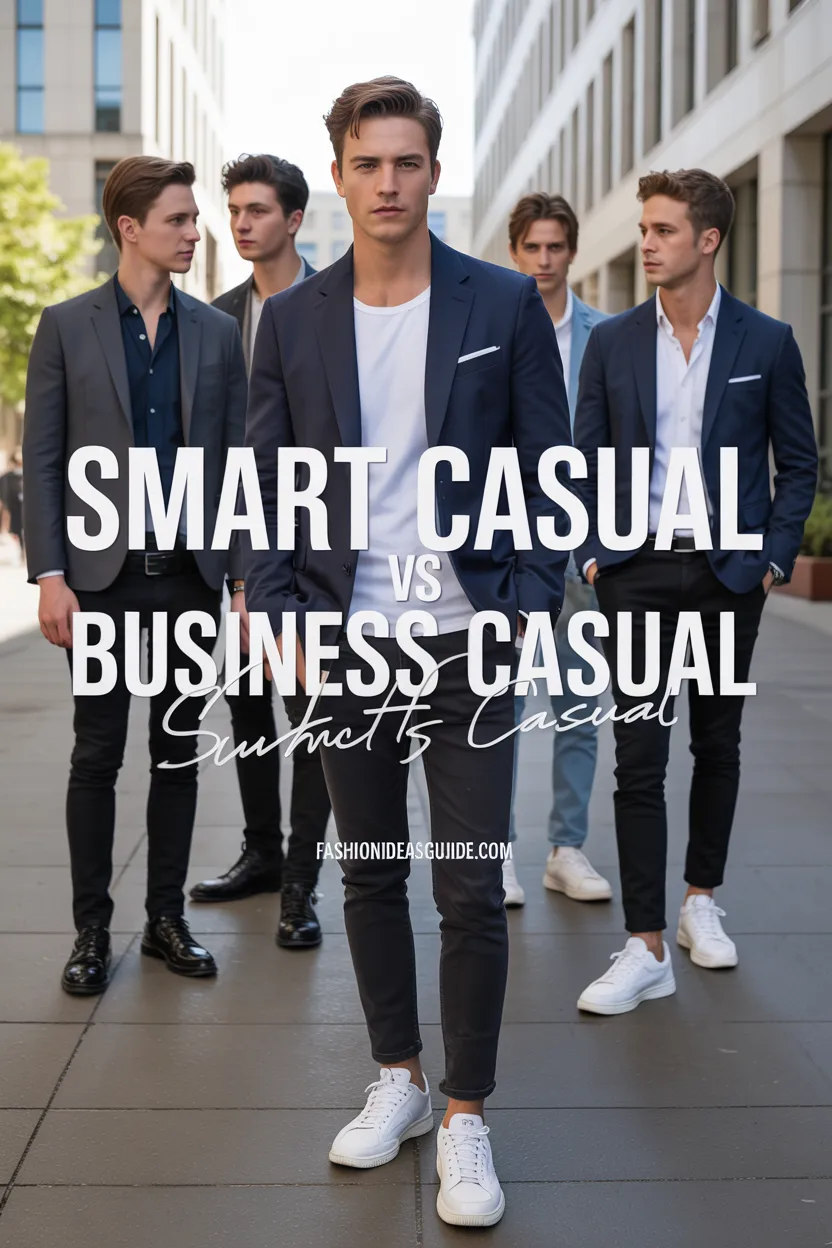
The Smart Casual vs Business Casual outfits for men 2026 topic is still highly relevant because modern dress codes have become more flexible and situational. Many men still feel confused about when to dress relaxed and when to look more structured, especially with changing office cultures and social expectations.
In my experience studying modern men’s fashion behavior, I’ve noticed that most styling mistakes happen when people mix both dress codes without understanding the purpose behind each one. Smart casual is more relaxed and expressive, while business casual focuses on a clean, professional appearance.
This guide breaks down both styles in a simple and practical way so it becomes easier to choose the right outfit for work, meetings, or casual events without second-guessing.
Key Takeaways
- Smart casual is relaxed but still neat and stylish
- Business casual is more structured and professional
- Fit and footwear matter more than expensive clothing
- Neutral colors make outfits easier to style
- The setting decides which dress code is appropriate
1. Understanding Smart Casual Style
Smart casual is a modern dress code that blends comfort with a refined appearance. It allows more personal expression while still keeping the outfit clean and presentable. This style works especially well for social events, casual meetings, or workplaces that do not require strict formal dressing.
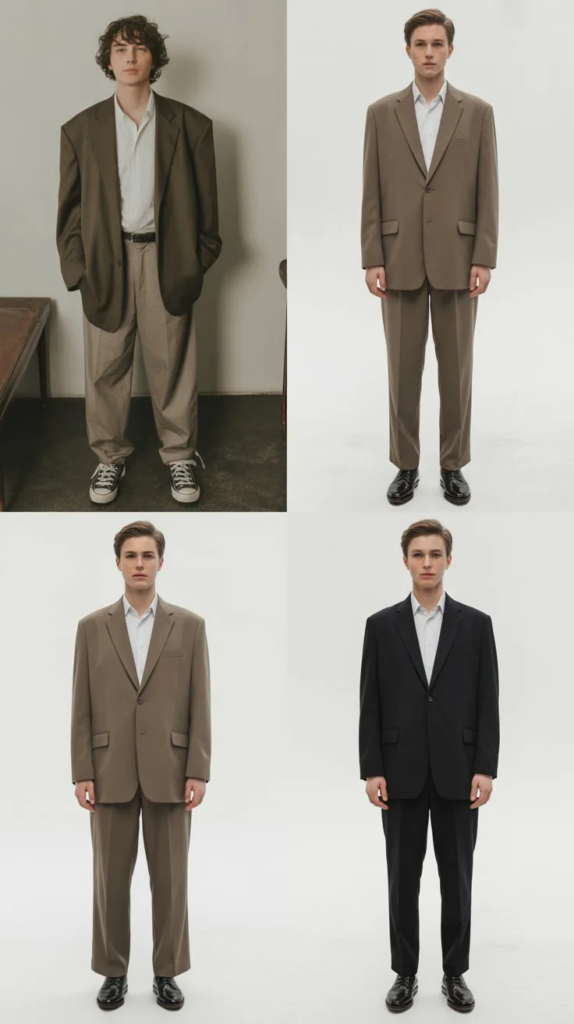
From a practical styling point of view, smart casual is about balance. It should never look too relaxed or too formal. Outfits often include combinations like blazers with jeans or chinos paired with simple shirts or knitwear. Footwear also plays an important role, with clean sneakers, loafers, or brogues completing the look.
In 2026, smart casual has become even more popular because workplaces are shifting toward hybrid and creative environments where comfort and presentation both matter.
2. Understanding Business Casual Style
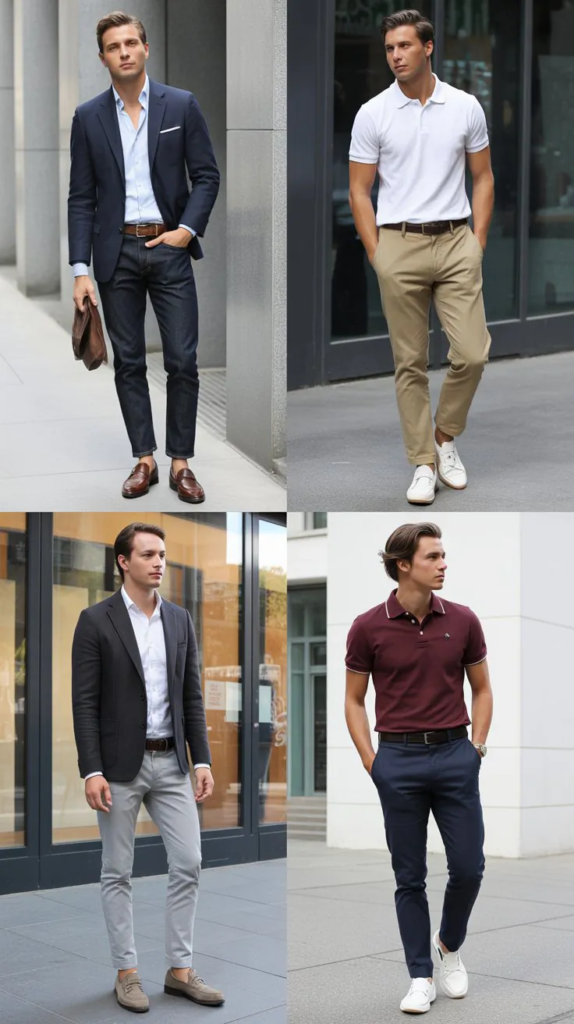
Business casual is more structured compared to smart casual and is mainly designed for professional environments. It removes the need for full suits but still maintains a polished and reliable appearance that reflects professionalism.
This style is commonly used in offices, meetings, and formal workplace settings where appearance still plays an important role in communication and first impressions. It focuses on clean lines, neat fits, and minimal styling errors.
Typical business casual outfits include dress shirts paired with chinos or tailored trousers, often layered with blazers or lightweight jackets. Formal shoes such as oxfords or derbies complete the look and maintain a professional finish.
3. Key Differences Between Smart Casual and Business Casual
The main difference between these two styles lies in purpose and presentation. Smart casual is more flexible and allows personal style to come through, while business casual is focused on consistency, structure, and professionalism.
Smart casual outfits often feel more relaxed and creative, making them suitable for informal environments. Business casual, on the other hand, avoids overly casual elements and ensures a more refined and office-appropriate appearance.
Understanding this difference helps avoid common dressing mistakes, especially when moving between work settings and social situations. Choosing the wrong style can easily make an outfit look either too casual or unnecessarily formal.
4. Smart Casual Outfit Ideas for Men
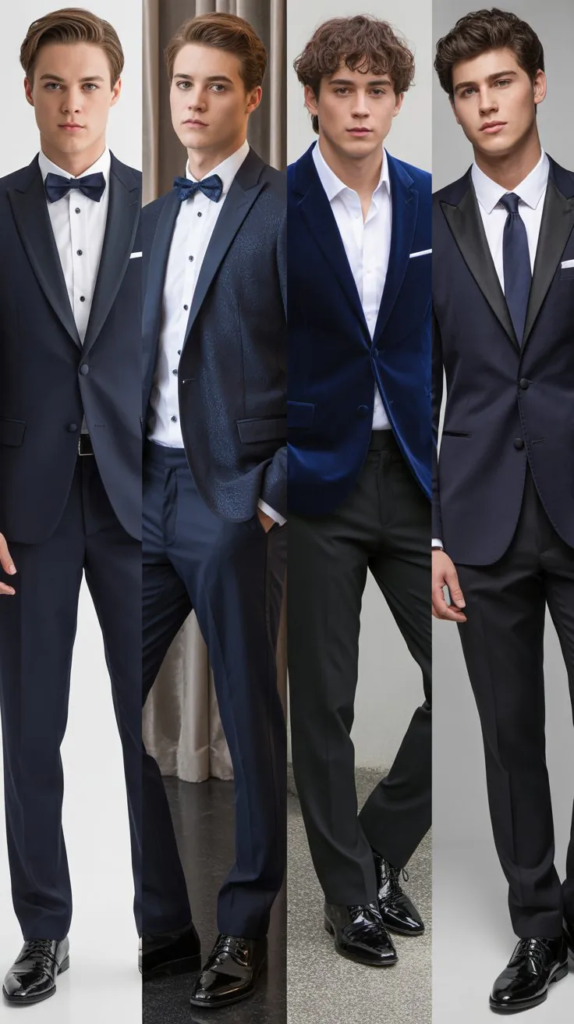
Smart casual outfits work best when they look effortless but still well put together. The goal is to appear stylish without looking overdressed. A common approach is combining structured pieces with relaxed items to create balance.
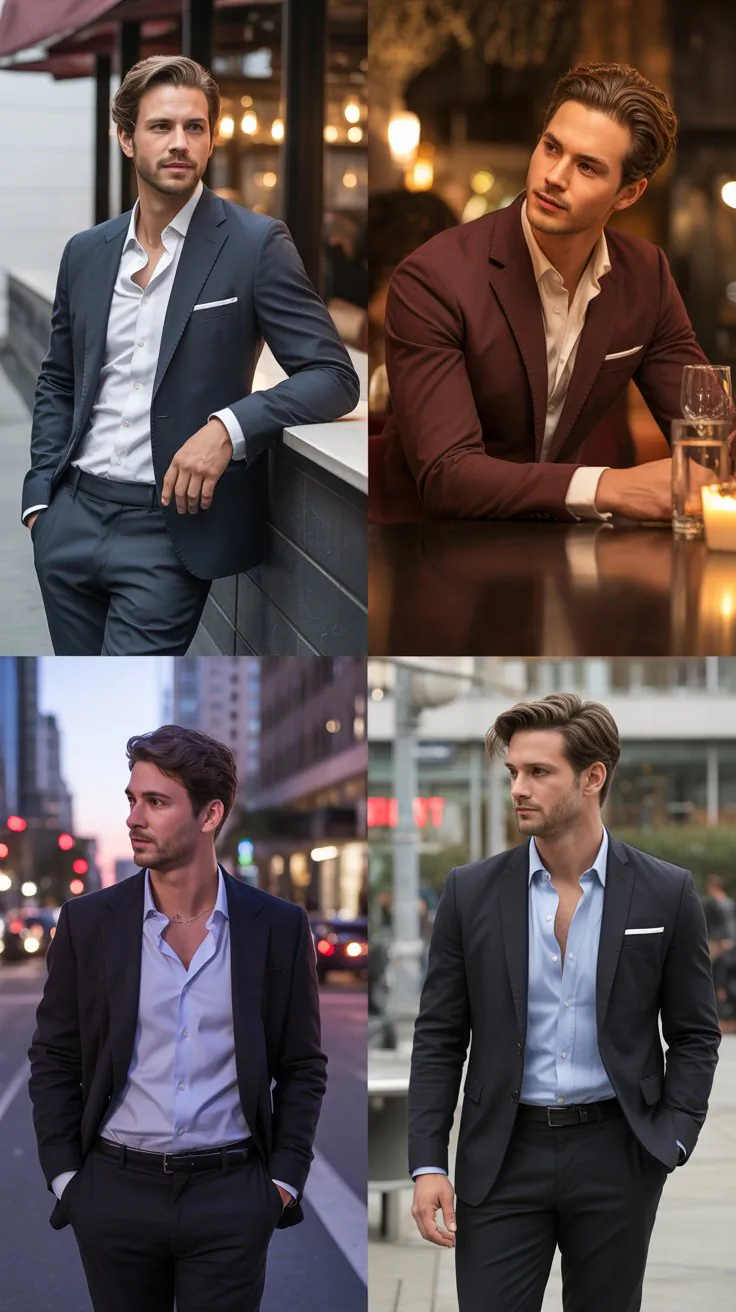
For example, a navy blazer paired with a simple white t-shirt, slim-fit jeans, and clean sneakers creates a modern and easygoing look. Another reliable option is a polo shirt with chinos and loafers, which works well for both daytime and evening outings. Layering a lightweight sweater over a collared shirt with dark denim is another practical combination that adds depth without overcomplicating the outfit.
Neutral colors such as navy, white, grey, and beige are often preferred because they make outfits easier to mix and match. Keeping clothing well-fitted is also essential, as fit has a bigger impact on style than brand or price.
5. Best Business Casual Outfit Ideas for Men
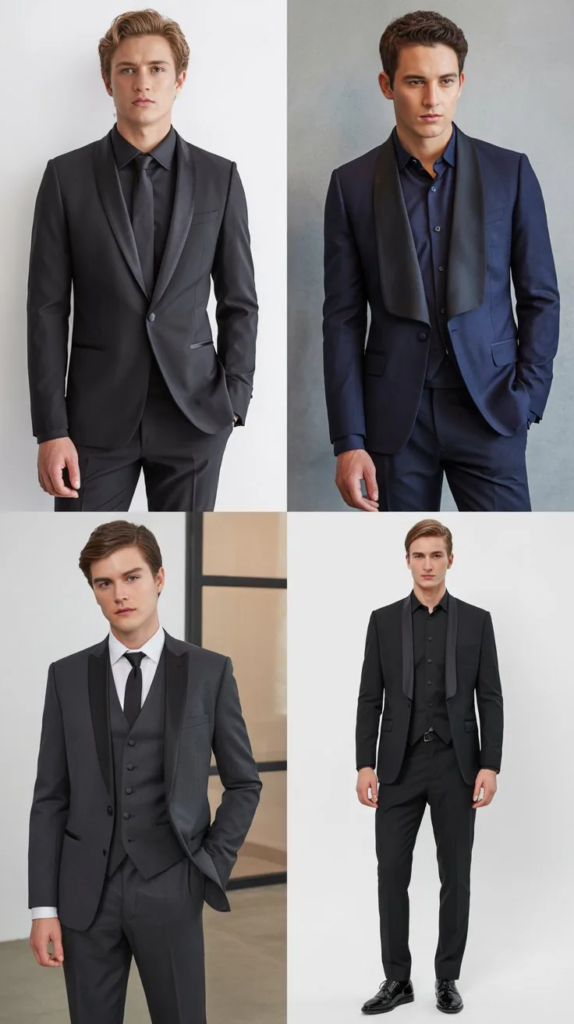
Business casual outfits should maintain a professional tone while still offering comfort throughout the day. The focus is on clean presentation, structured clothing, and balanced color choices that reflect confidence and reliability.
A classic business casual look includes a crisp white shirt paired with navy chinos and brown leather shoes. Another strong combination is a blazer worn over a light blue shirt with tailored trousers, which works well for meetings and presentations. Neutral shades such as grey, navy, and beige are commonly used because they create a calm and professional appearance.
Matching belts with shoes is another important detail that helps maintain visual consistency. Clothing should always be wrinkle-free and properly fitted, as small details can significantly affect the overall impression in professional environments.
6. When to Wear Smart Casual vs Business Casual
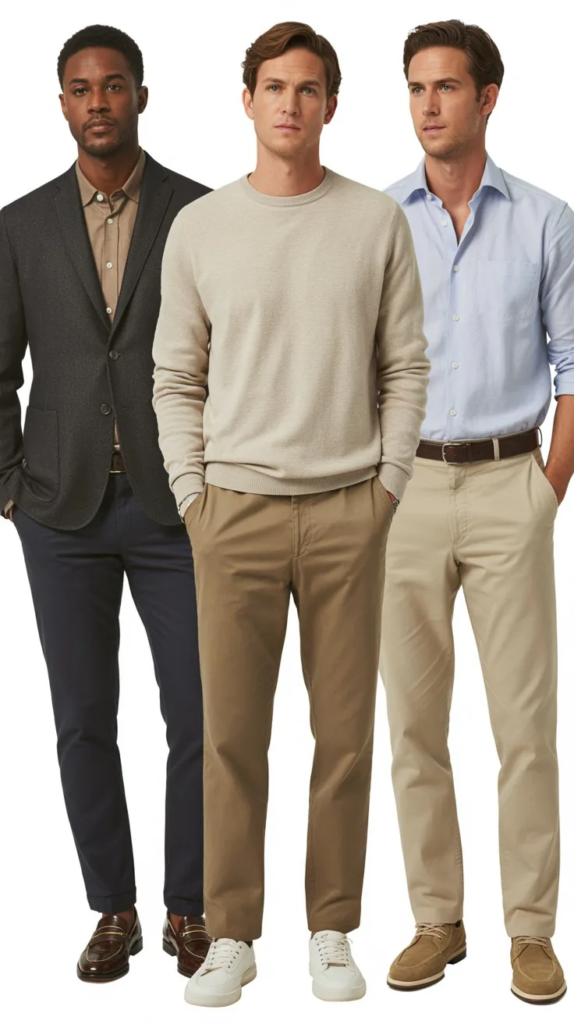
Choosing between smart casual and business casual depends entirely on the environment and expectations of the situation. Smart casual is more suitable for relaxed settings such as dinners, casual Fridays, or social gatherings where comfort and personality are important.
Business casual is better suited for office work, formal meetings, and presentations where professionalism is expected. In networking situations, business casual is often the safer option because it creates a more polished first impression.
When there is uncertainty, it is usually better to slightly lean toward business casual. Observing the dress code of the environment also helps in making the right decision and avoiding mismatched outfits.
7. Common Mistakes to Avoid
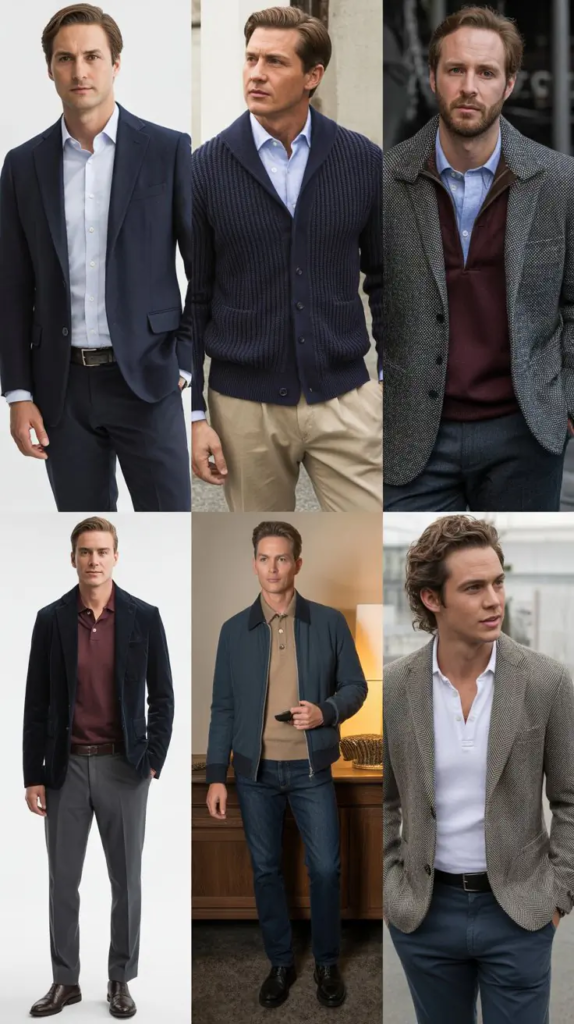
One of the most common mistakes in styling is mixing overly casual items, such as ripped jeans or graphic-heavy clothing, into business casual outfits. This can make the entire look appear unprofessional and out of place. Another frequent issue is wearing ill-fitted clothing, which can ruin even expensive outfits.
Footwear is often ignored, but it plays a major role in defining the outfit. Wearing the wrong shoes can break the balance of both smart casual and business casual looks. Over-accessorizing is also a mistake, as too many items can make the outfit look cluttered instead of refined.
Keeping outfits simple, clean, and well-fitted always produces a stronger overall appearance.
Conclusion
Understanding Smart Casual vs Business Casual outfits for men 2026 is essential for building a practical and versatile wardrobe that works across different situations. Both styles serve different purposes, and knowing when to use each one helps eliminate confusion in daily dressing.
With the right focus on fit, balance, and context, it becomes much easier to create outfits that look natural yet confident. A well-planned wardrobe not only improves appearance but also helps in making a strong impression in both professional and social settings.